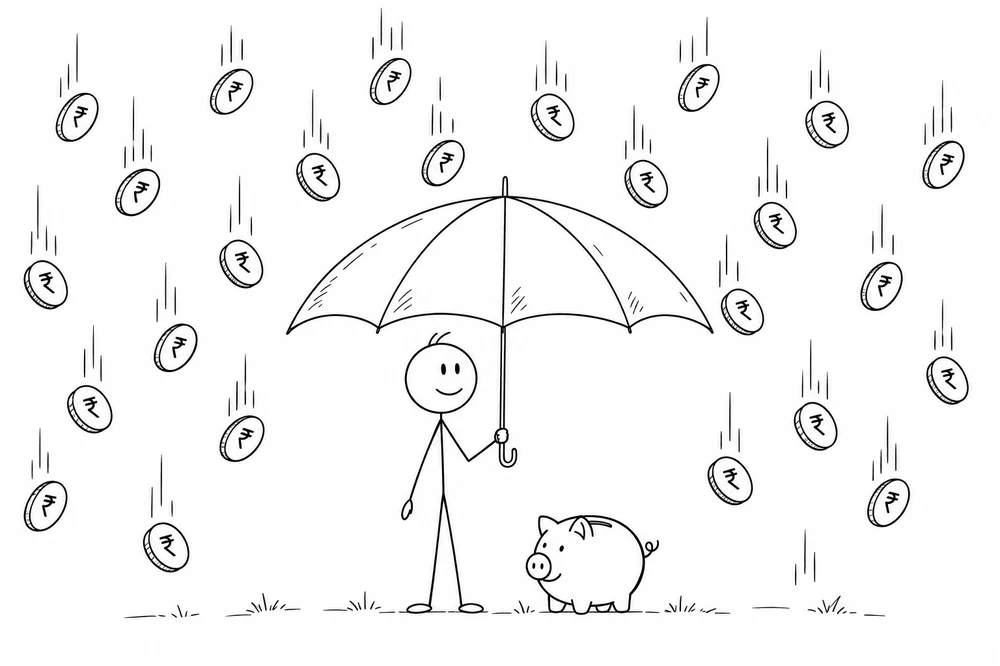
Emergency fund
The emergency fund is the most boring instrument in personal finance and the one that quietly saves you the most money.
How much is enough, in stages
“Three to six months of expenses” is the standard answer, and it is useless as a starting instruction because it sounds like a wall.
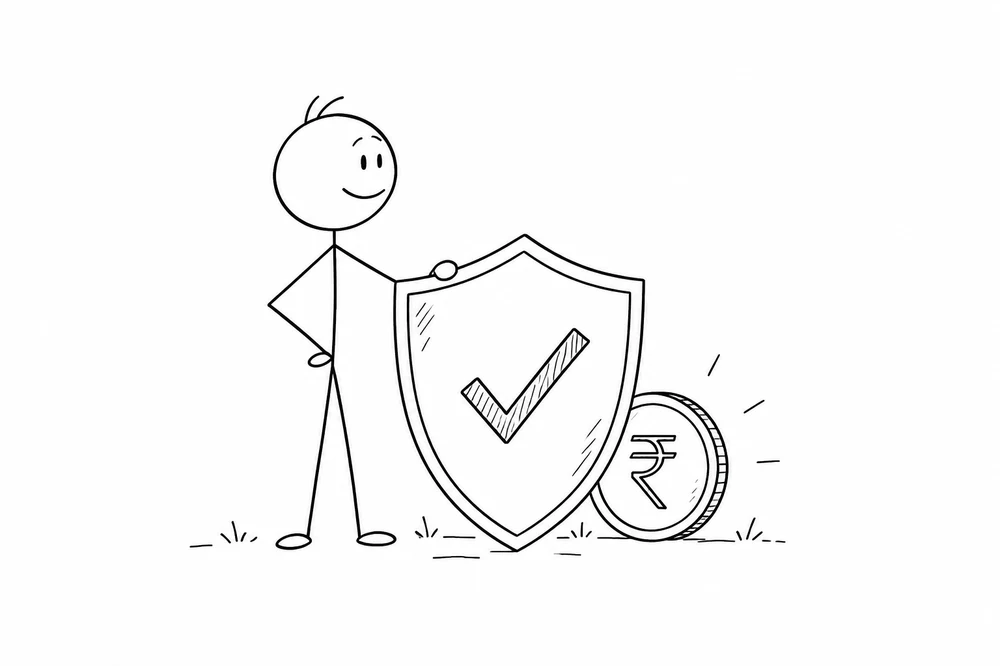
Where to keep it
The fund has one job: be there, whole, on the worst day. That rules out equity entirely; a crash and an emergency have a habit of arriving together, and selling into a 30% drawdown converts a bad month into a permanent setback.
The mistakes that undo the work
The first is treating the fund as a return-seeking allocation and drifting it into something riskier because “it is just sitting there.” It is sitting there the way a fire extinguisher sits there.
Why it comes before investing
In the allocation framework in Farming Money, the emergency fund sits outside the portfolio entirely, and that placement is the point.
The emergency fund is the most boring instrument in personal finance and the one that quietly saves you the most money. Not because of what it earns, but because of what it prevents: the forced sale of your best investments at the worst possible moment, which is where most Indian portfolios actually die.
How much is enough, in stages
“Three to six months of expenses” is the standard answer, and it is useless as a starting instruction because it sounds like a wall. Think in stages instead.
Stage one is one month of expenses. This handles the broken appliance, the medical test insurance will not cover, the sudden travel. If you have nothing saved, this is the entire first goal, and it comes before investing, before extra loan prepayment, before everything.
Stage two is three to six months. This is the job-loss buffer: time to find a new role, negotiate, and reach the first paycheck. A salaried employee in a stable sector can sit at three. Someone in a startup, a cyclical industry, or running a business should hold six, because their income is exactly the kind that disappears without warning.
Stage three is a year or more, and it is not paranoia if your life has real fixed commitments: a large EMI, a single income with dependents, parents who rely on you. The right size is the one that lets you sleep, and people with fragile income need more sleep insurance than the textbook says.
Where to keep it
The fund has one job: be there, whole, on the worst day. That rules out equity entirely; a crash and an emergency have a habit of arriving together, and selling into a 30% drawdown converts a bad month into a permanent setback.
The workhorse is a liquid mutual fund. It earns close to prevailing short-term rates, roughly 6 to 7% in 2026, and redemptions land in your account within a day. A savings account with a sweep-in FD is the acceptable alternative: slightly lower return, zero learning curve. What to avoid: long-duration FDs, where premature withdrawal penalties eat the interest advantage, and anything with a lock-in, which defeats the purpose by definition.
The mistakes that undo the work
The first is treating the fund as a return-seeking allocation and drifting it into something riskier because “it is just sitting there.” It is sitting there the way a fire extinguisher sits there.
The second is raiding it for non-emergencies. A holiday deal is not an emergency. A phone upgrade is not an emergency. Every raid teaches your future self that the fund is optional, and the one time it is truly needed is the time it will not be there.
The third is never refilling it after a genuine emergency. The fund is not a one-time project; it is a revolving buffer that gets rebuilt the moment income stabilises.
Why it comes before investing
In the allocation framework in Farming Money, the emergency fund sits outside the portfolio entirely, and that placement is the point. Investing without the buffer means every market downturn is personally dangerous, because your investments are your emergency fund. With the buffer, a crash is something that happens to a number on a screen, while your life continues uninterrupted.
Read: Starting to invest
Read: Inflation
Nobody has ever posted about their emergency fund doubling. They post about the stocks. But ask anyone who lost a job in 2020 which one mattered more that year.