In 2019 I planted about 1200 banana saplings on a couple of acres in a village in Jharkhand.
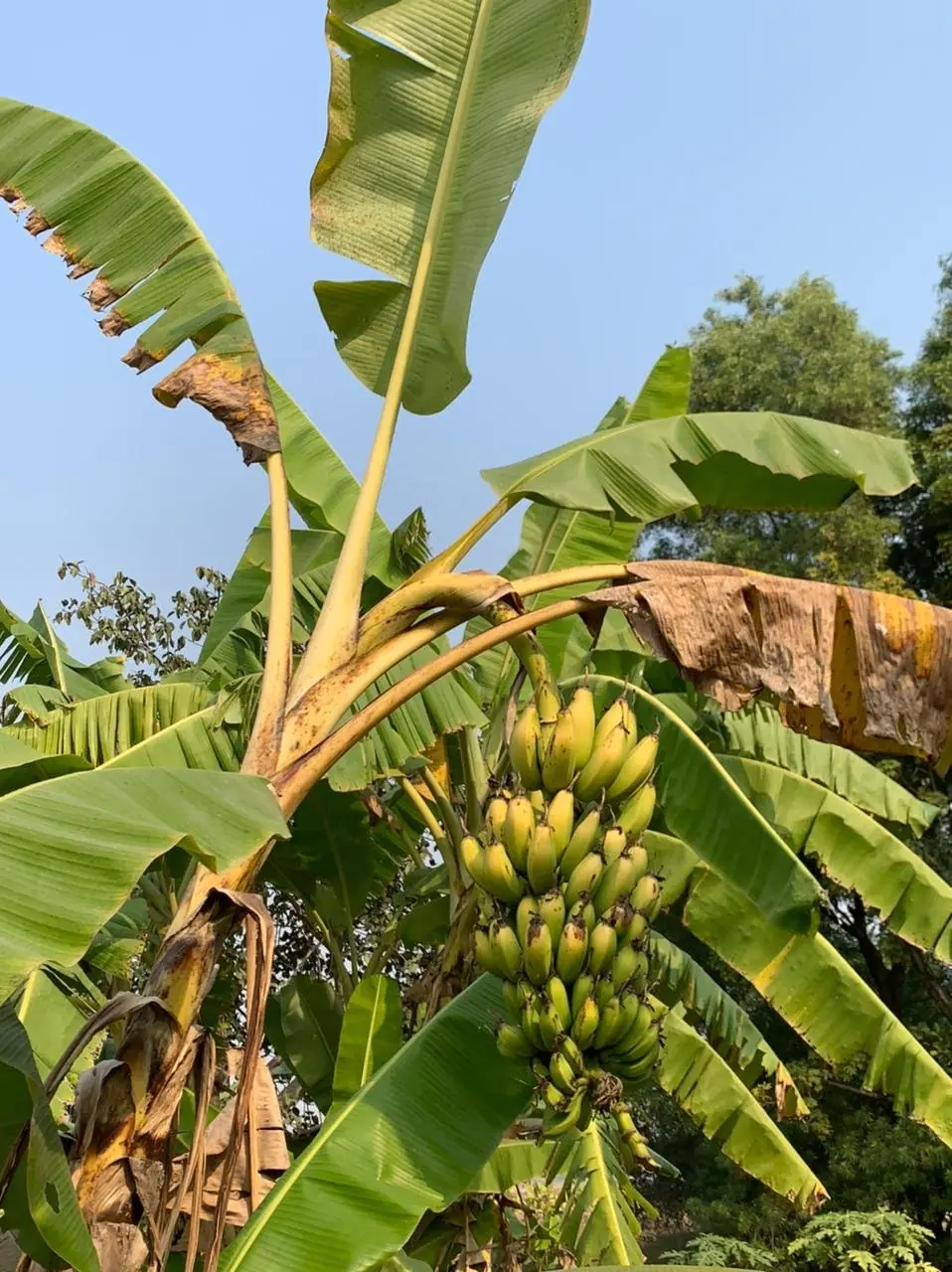
The number has grown to around 1500 plants, but a lot of them got hit with Panama wilt. They still give fruit, just not as much as they could. It was disappointing, but it taught me a few things.
Slide the share of plants hit by Panama wilt (illustrative only).
My father had already put up a small temple there, along with sheds for cows, a basic school, a clinic, and a few rooms for people who come to help. The land around it has decent soil and a stream for water.
The problem with land like this is that it doesn’t really look after itself if no one is around. Over the years there were various attempts to do something with it. Every time it became clear that if you’re not physically there, farming (or even just keeping things alive) is hard.
I wasn’t trying to make a living off it. I just wanted to get some trees in the ground. So I started small: ordered the saplings, got someone local to look after the patch, fenced it, and figured we’d see what happened.
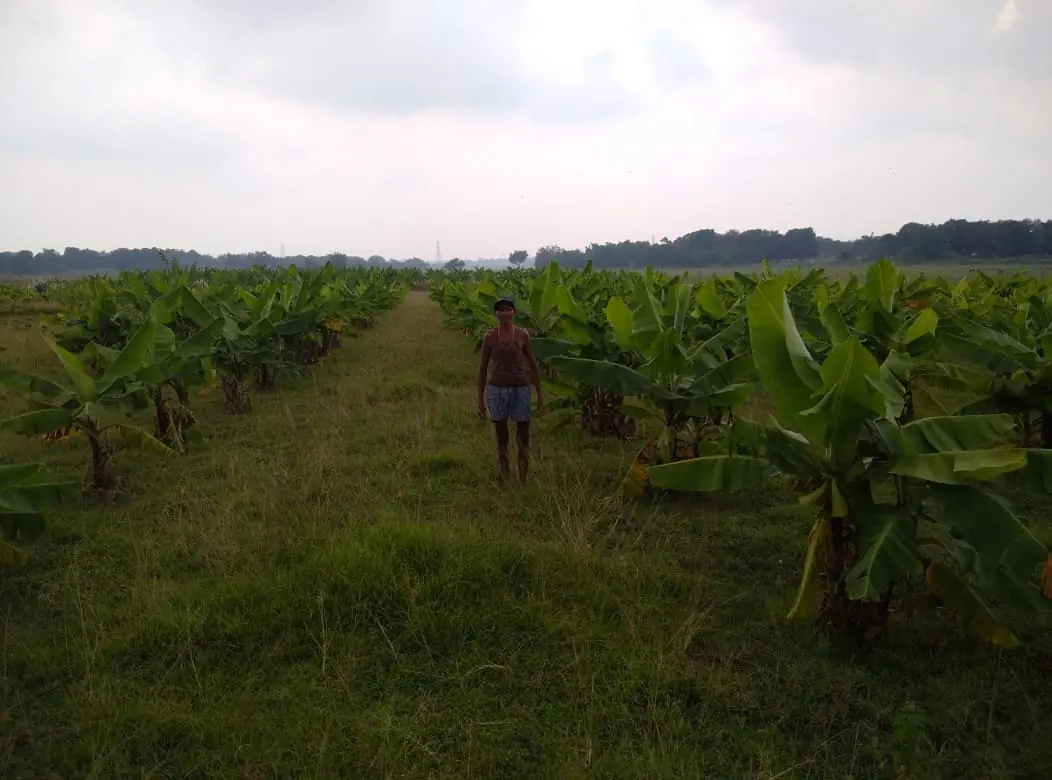
Bananas made sense for the soil and climate. Almost every part of the plant can be used, and they’re not too hard to sell once ready. I got connected to a buyer who could take them.
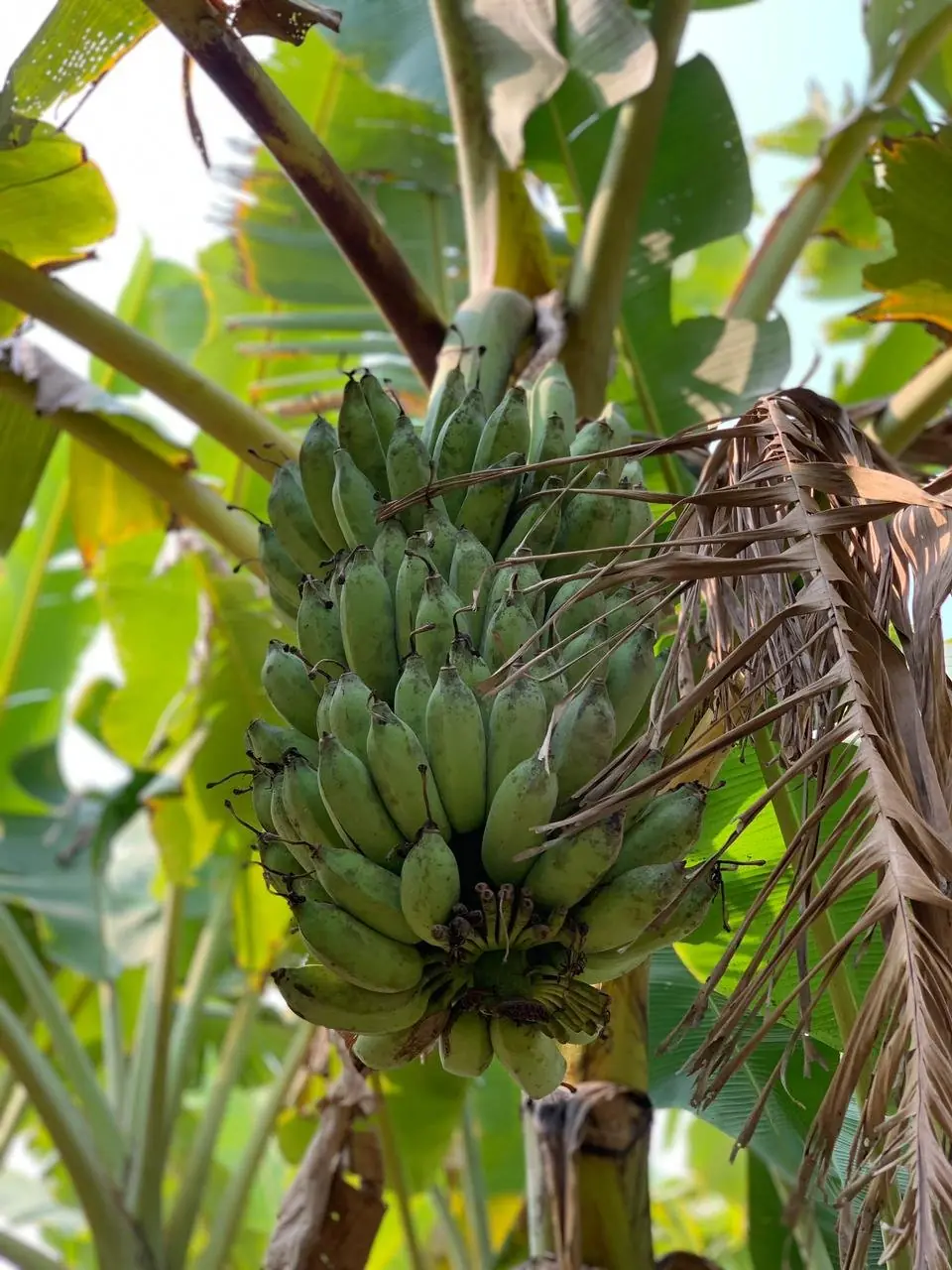
The first few years were full of the usual lessons. Grass took over in places, water was uneven, and we didn’t catch the disease early enough on some plants. The actual harvest numbers were nothing special.
I looked at more elaborate approaches like Miyawaki forests or full permaculture, but they all seemed to require constant on-the-ground attention and local knowledge I didn’t have from Bangalore. So I stuck with the simplest thing that could actually get done from a distance.
What surprised me later was how much the land itself changed, even with modest commercial results. Satellite images from before and after show it greening up. The soil holds more moisture now, summers feel a little less harsh under the trees, and the cows actually use the shade instead of standing out in the open all day.
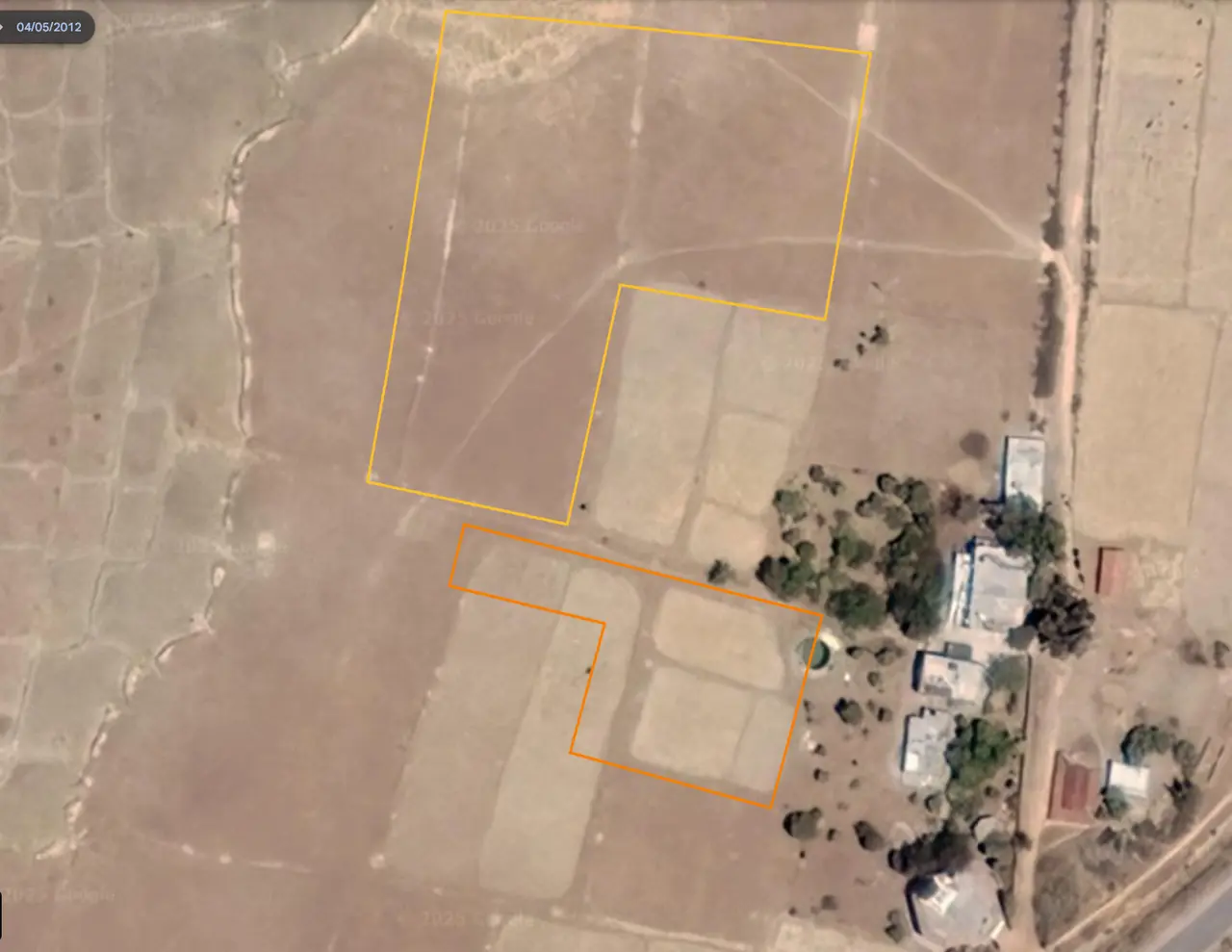
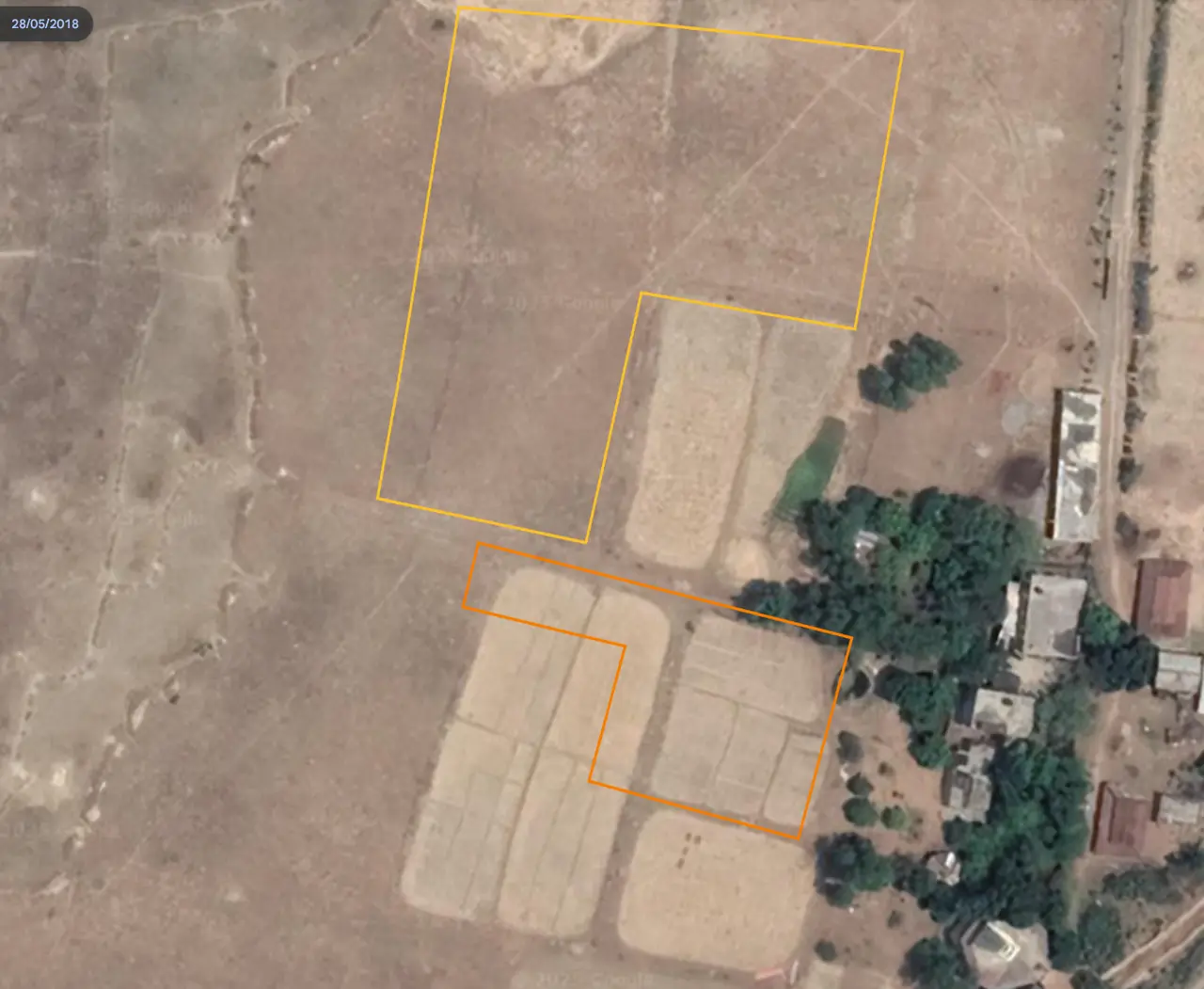
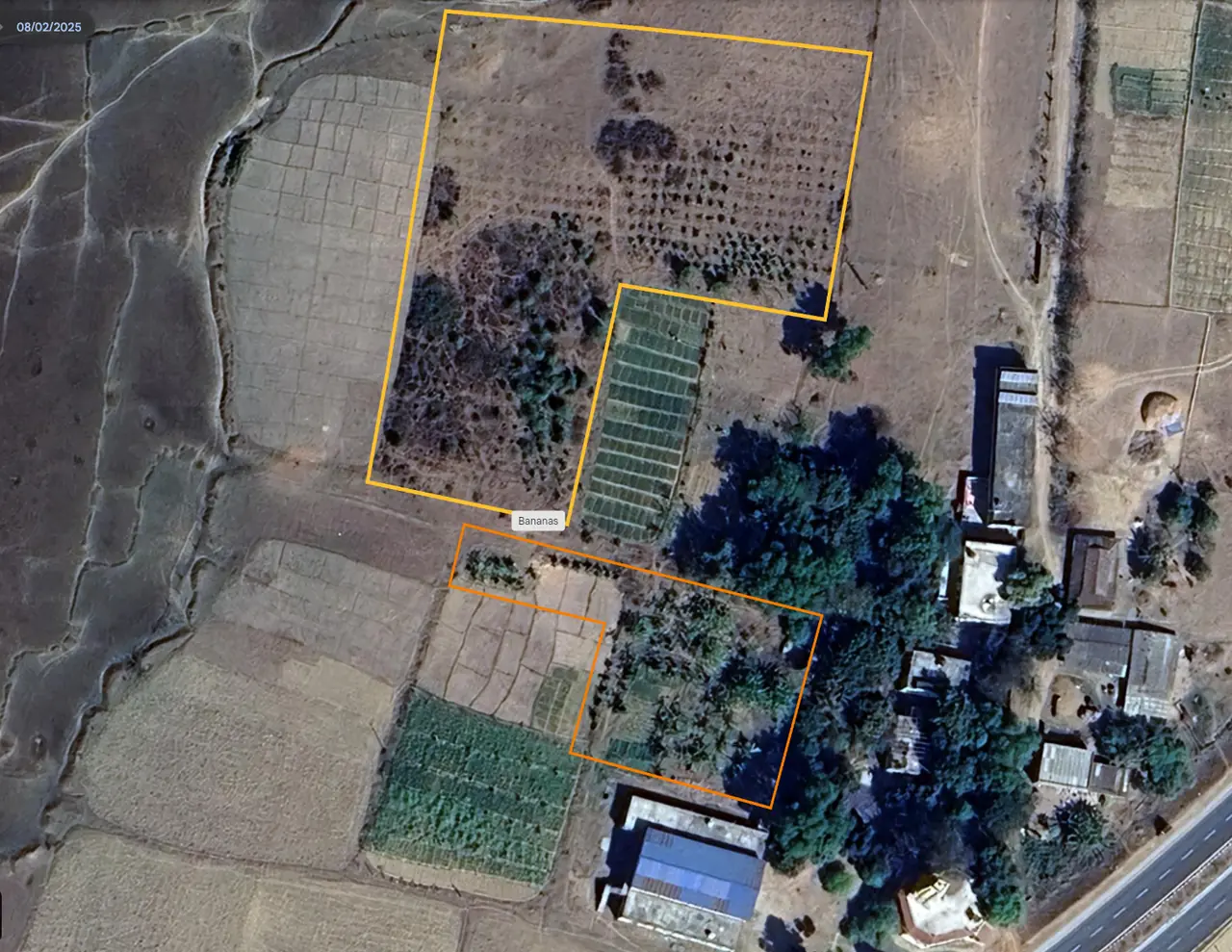
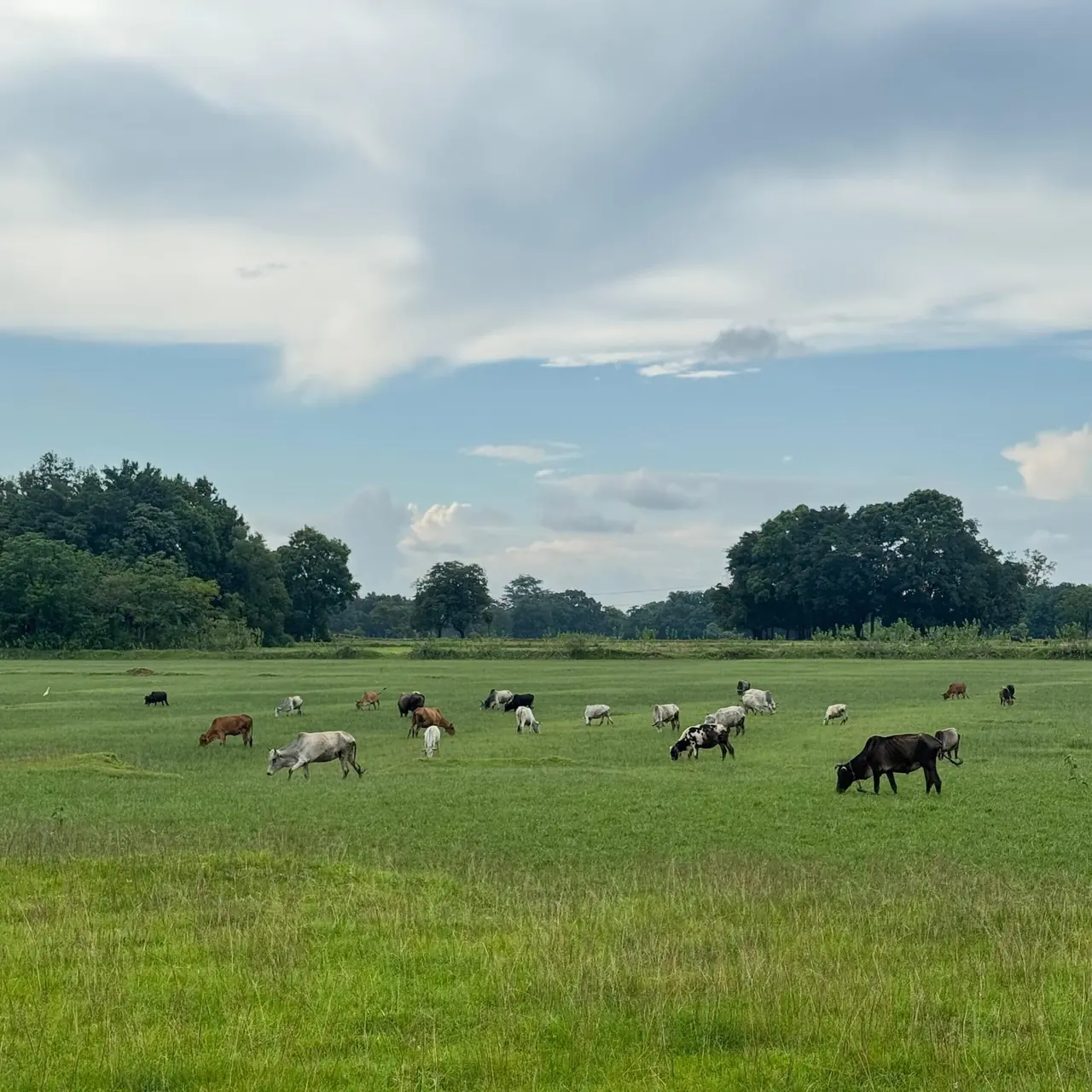
It never turned into a big money-making operation. But the land is in noticeably better shape than when we started, and that was not obvious at the beginning.
The school and the rest of the setup nearby have kept growing in their own way too.