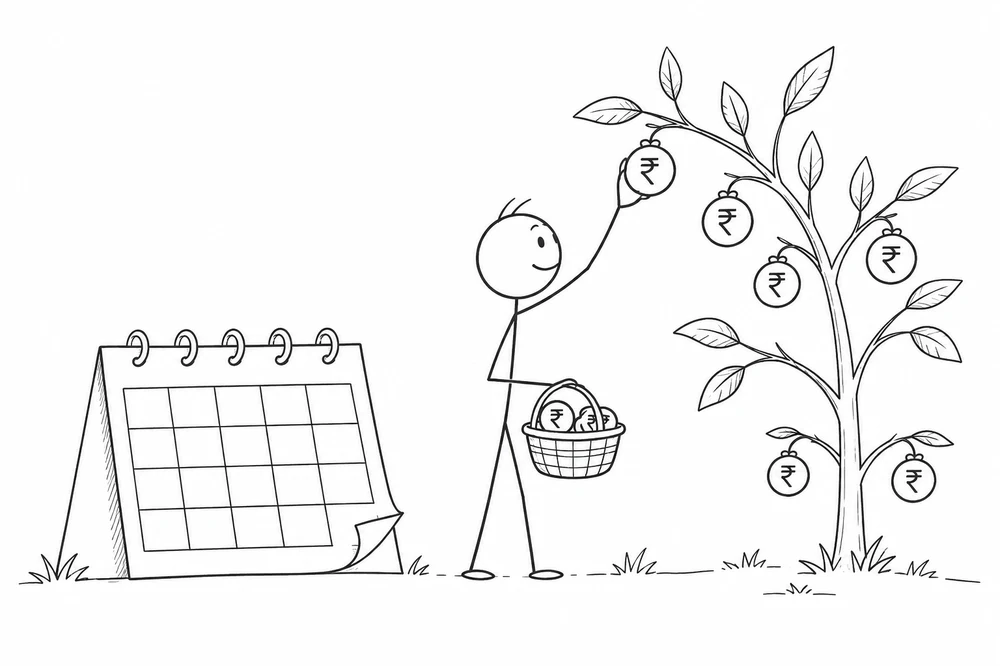
LTCG tax on equity
Long-term capital gains tax on equity has had three lives in India: abolished in 2004, brought back in 2018 at 10%, and raised in Budget 2024 to 12.5%.

The current rules, without the fog
Equity shares and equity mutual funds held for more than 12 months are long-term. Gains up to Rs 1.25 lakh in a financial year are exempt; above that, you pay 12.5%.
The harvesting habit
Because the exemption resets annually, an investor with large unrealised gains leaves money on the table by never touching them.
Where people overthink it
The first is letting the tax tail wag the investment dog: holding a stock you no longer believe in only to avoid the 12.5%.
Long-term capital gains tax on equity has had three lives in India: abolished in 2004, brought back in 2018 at 10%, and raised in Budget 2024 to 12.5%. Each time, investors had to relearn the same lesson: the tax code is not a fixed wall, it is weather. Here is what the rules are now, in September 2026, and how I plan around them.
The current rules, without the fog
Equity shares and equity mutual funds held for more than 12 months are long-term. Gains up to Rs 1.25 lakh in a financial year are exempt; above that, you pay 12.5%. Sell within 12 months and the gain is short-term, taxed at 20%. There is no indexation benefit, and no grandfathering except for the pre-2018 cost basis rule, which matters only if you still hold something bought before January 31, 2018.
Two related facts that people mix up. The Rs 1.25 lakh exemption applies to gains, not to your sale proceeds. And it resets every financial year, which is where the planning lives.
The harvesting habit
Because the exemption resets annually, an investor with large unrealised gains leaves money on the table by never touching them. The routine: once a year, sell enough long-term holdings to realise gains up to the Rs 1.25 lakh exemption and buy them back immediately. Your holding does not change, but your cost basis resets upward, permanently shrinking future taxable gains. India has no wash-sale rule, so the immediate repurchase is legal. The only costs are the small transaction charges and, in a falling market, the risk of buying back higher, which cuts both ways.
Where people overthink it
I see two mistakes. The first is letting the tax tail wag the investment dog: holding a stock you no longer believe in only to avoid the 12.5%. Do the math. On a Rs 10 lakh gain the tax is Rs 1.25 lakh; if the stock falls 15% while you wait for a friendlier tax year, you have paid Rs 1.5 lakh to save Rs 1.25 lakh. The second mistake is ignoring the exemption entirely and paying tax on gains that an annual harvest would have kept tax-free.
My own rule is dull: harvest the exemption every March, never delay a good sell for tax reasons, and treat the 12.5% as the price of having gains at all. The investors genuinely hurt by LTCG tax are the ones who made money. That is a problem worth having.
Read: 54EC bonds
The rate has changed three times in two decades and will change again. Build the habit, not the forecast: an annual date with the exemption is worth more than any prediction of what the next Budget does.