ASBA vs UPI for IPOs
ASBA stands for Application Supported by Blocked Amount, and if you have applied for an IPO in India any time in the last decade, you have used it whether you knew the name or not.

ASBA full form
ASBA stands for Application Supported by Blocked Amount. The name is the mechanism: the bank blocks the application money in your account, and only an allotment turns the block into a payment.

What ASBA actually is
When you apply for an IPO, your application money is not transferred to the company, the registrar, or any escrow account.

So where does UPI fit
When you apply through Zerodha, Groww or any broker app and approve a mandate in your UPI app, that mandate instructs your bank to place an ASBA block.

The common failure
The single most common way retail IPO applications fail is not rejection; it is the unapproved mandate. You apply in the broker app, assume you are done, and the mandate request sits in your UPI app until it expires.
Which should you use
If you are a retail investor with a UPI app, use UPI. It is ASBA with a better interface, and the cap does not bind you since retail applications are capped at Rs 2 lakh anyway.
ASBA stands for Application Supported by Blocked Amount, and if you have applied for an IPO in India any time in the last decade, you have used it whether you knew the name or not. The question people actually search for is narrower: when the broker app offers both options, is ASBA or UPI better for an IPO application? The honest answer is that this is a slightly confused question, because UPI is a way of doing ASBA, not an alternative to it. But the confusion is understandable, and untangling it tells you exactly what happens to your money.
ASBA full form
ASBA stands for Application Supported by Blocked Amount. The name is the mechanism: the bank blocks the application money in your account, and only an allotment turns the block into a payment. SEBI made it mandatory for IPO applications precisely so that your money never travels to anyone before it has to.
What ASBA actually is
The key word is blocked. When you apply for an IPO, your application money is not transferred to the company, the registrar, or any escrow account. It is blocked inside your own bank account: visible in your balance, unusable by you, still earning savings account interest. If you get an allotment, the exact amount is debited. If you get nothing, the block is released and the money never left. Before SEBI mandated this system, IPO applicants sent physical cheques and then waited weeks for refund orders to arrive by post. ASBA killed the refund problem by never letting the money leave in the first place.
So where does UPI fit
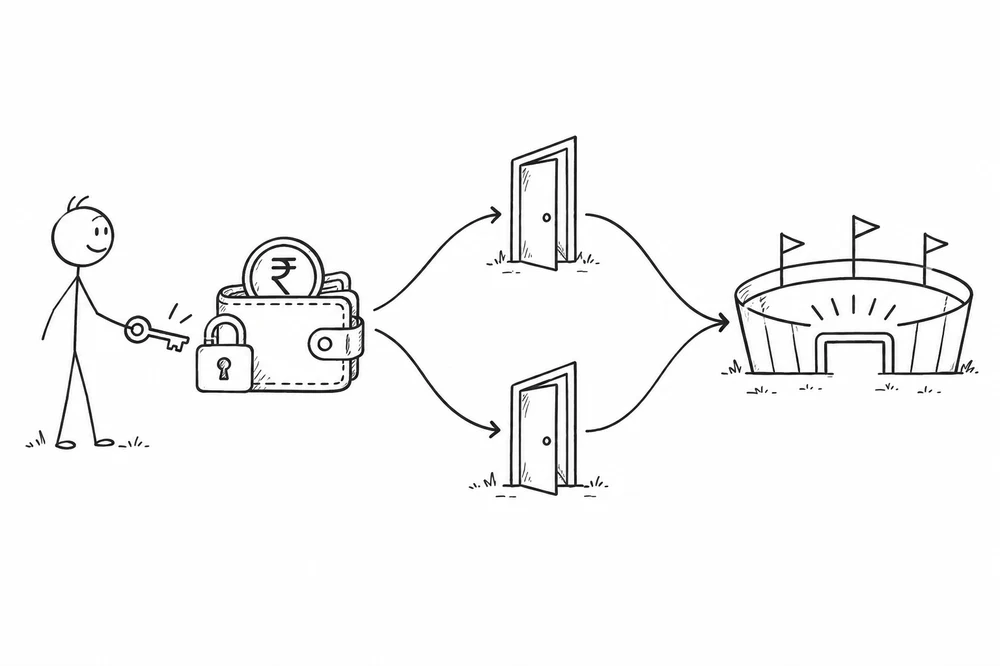
When you apply through Zerodha, Groww or any broker app and approve a mandate in your UPI app, that mandate instructs your bank to place an ASBA block. UPI is the front door; ASBA is the mechanism behind it. The alternative front door is net-banking ASBA, where you apply through your bank’s own portal (or, in the old style, a physical form at the bank) and the bank places the block directly.
For a retail investor applying for up to Rs 2 lakh, both routes end in the same place: money blocked in your account, allotment handled by the registrar, debit or release at the end. The differences are practical:
| UPI route | Net-banking ASBA | |
|---|---|---|
| Where you apply | Your broker app, then approve in UPI app | Your bank’s website or branch |
| Application limit | Rs 5 lakh per application | No UPI cap; used for large applications |
| Speed | Two minutes, if you approve the mandate | Slower, more forms |
| Common failure | Forgetting to approve the mandate; the application silently dies | Details keyed wrong by hand |
| Who must use it | Most retail investors | Anyone applying above Rs 5 lakh (HNI category) |
The common failure
The single most common way retail IPO applications fail is not rejection; it is the unapproved mandate. You apply in the broker app, assume you are done, and the mandate request sits in your UPI app until it expires. No approval, no block, no application. The fix is boring: after applying, open your UPI app, approve the mandate, and check that the block shows in your bank account. A two-minute check that decides whether you were ever in the lottery at all.
Which should you use
If you are a retail investor with a UPI app, use UPI. It is ASBA with a better interface, and the cap does not bind you since retail applications are capped at Rs 2 lakh anyway. Net-banking ASBA matters when you are applying above Rs 5 lakh, or when your UPI mandate flow is glitching on a heavy-subscription day and the bank portal is the quieter door. Either way, the protection is the same and it is the part that matters: until allotment, the money is yours, blocked but yours.
People argue about ASBA versus UPI the way they argue about which gate to enter a stadium through. What matters is that the stadium keeps your wallet in your pocket until you actually have a seat.