Sunk cost fallacy
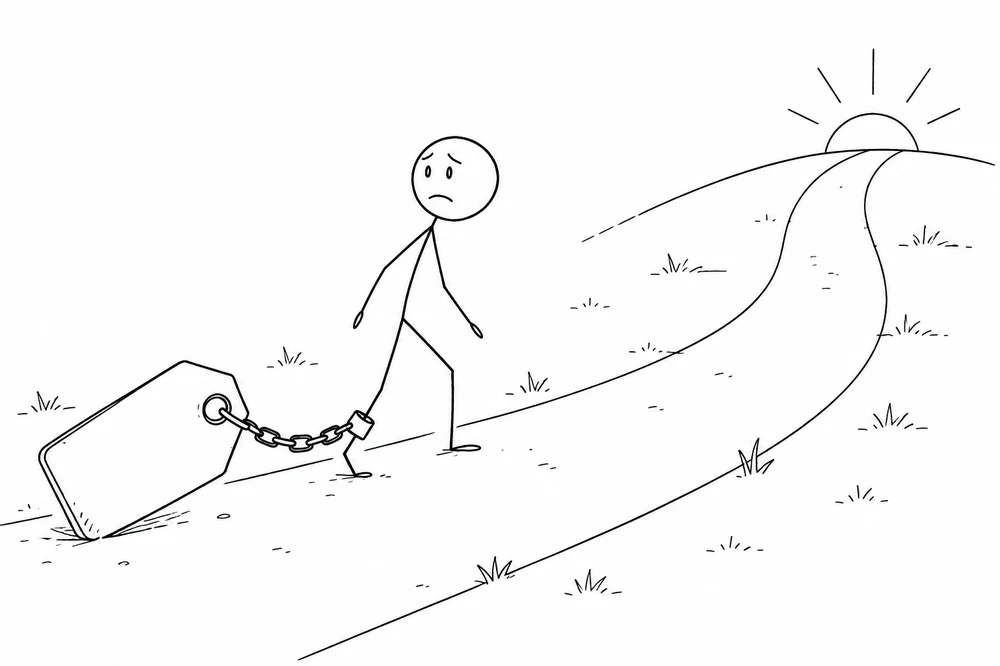
“I will sell when it gets back to my purchase price.” Every investor has said this sentence, and the market has never once cared.
The trap, stated plainly
A sunk cost is money already spent that cannot be recovered. The rational rule is simple: only future costs and future benefits should drive a decision.
Why it grips investors so hard
Two quirks of the mind team up here. Loss aversion: a loss hurts roughly twice as much as an equal gain feels good, so realising a loss is physically unpleasant.
The test that breaks the spell
One question dissolves most of this: if I did not own this stock, would I buy it today at today’s price? If the answer is no, you are not holding an investment.
“I will sell when it gets back to my purchase price.” Every investor has said this sentence, and the market has never once cared. The price you paid for a stock is information about your past. It tells the market nothing about the stock’s future. Treating it as the finish line is the sunk cost fallacy in its purest form, and it quietly destroys more retail portfolios than any crash.
The trap, stated plainly
A sunk cost is money already spent that cannot be recovered. The rational rule is simple: only future costs and future benefits should drive a decision. In practice, the brain refuses. You paid Rs 500 for a share now trading at Rs 300, and selling at Rs 300 feels like losing Rs 200, so you hold. But the Rs 200 is already gone. The only live question is whether the Rs 300 sitting in that stock is the best use of Rs 300 today.
Notice what the “back to my price” vow actually does. It converts a bad position into a hostage situation where you are both the hostage and the negotiator.
Why it grips investors so hard
Two quirks of the mind team up here. Loss aversion: a loss hurts roughly twice as much as an equal gain feels good, so realising a loss is physically unpleasant. And self-image: selling at a loss means admitting, in writing, that you were wrong. Holding requires no admission at all. The portfolio statement becomes a place we go not to manage money but to manage how we feel about ourselves.
I have done this myself, held a position long past the point where my thesis was dead, because selling would have made the mistake official. The stock did not care about my feelings, and it recovered exactly when its business recovered, which is to say on its own schedule, not mine.
The test that breaks the spell
One question dissolves most of this: if I did not own this stock, would I buy it today at today’s price? If the answer is no, you are not holding an investment. You are holding a receipt and waiting for the market to apologise. Sell, redeploy the money into something you would actually buy, and let the tax treatment, if a loss helps, be a small consolation rather than the strategy.
The same fallacy shows up off the market too: the unread gym membership, the terrible movie watched to the end because the ticket was paid for, the failing project that gets one more year because it has already had three. The market just invoices you faster.
Your purchase price is a story you tell yourself about the past. The market prices only the future. Every rupee you leave in a dead position to protect that story is a rupee not working anywhere else, and the meter is running.