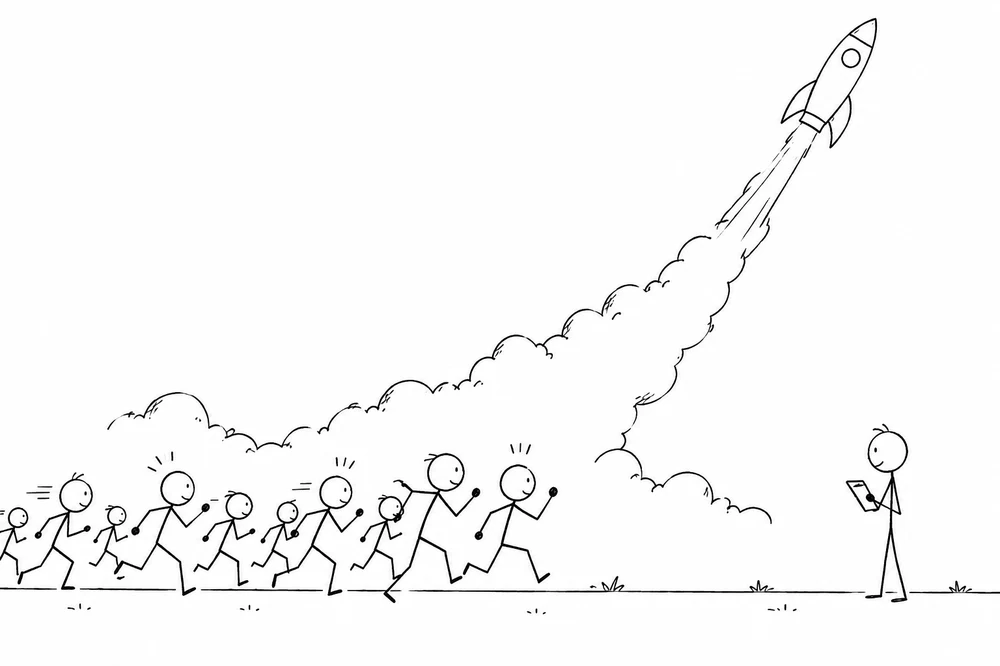
FOMO investing
Every market cycle has a moment when your group chat turns into a trading floor. Someone posts a screenshot of a 60% gain.
Why FOMO is worse now than ever
Speed: a theme that once took a year to spread now takes a week, because finfluencers, WhatsApp groups and Reddit compress the whole hype cycle into days.
What it costs, in numbers
Studies of investor behaviour keep finding the same gap: the average equity fund earns more than the average equity fund investor, because investors buy after the good years and sell after the bad ones.
What I do instead
Three rules that have saved me real money. First, I never buy anything the same week I first hear about it; if the thesis is good, it will still be good in a month, and most are not.
Every market cycle has a moment when your group chat turns into a trading floor. Someone posts a screenshot of a 60% gain. Someone else is up 3x on a smallcap you have never heard of. And a quiet, reasonable person who was happily investing in index funds last month is suddenly asking how to buy a defence stock at its all-time high. That is FOMO, and it is the most reliable wealth-transfer mechanism ever built, from the patient to the early.
Why FOMO is worse now than ever
Two things changed. Speed: a theme that once took a year to spread now takes a week, because finfluencers, WhatsApp groups and Reddit compress the whole hype cycle into days. And visibility: you now watch other people’s gains in near real-time. Your father never knew what his colleague’s portfolio did this week. You know what a stranger’s did this morning.
The mechanics are always the same. A story starts (EVs, defence, AI, railways), prices run, the story gets louder precisely because prices ran, and retail money arrives in bulk near the end. By the time the idea feels safe, it is priced for perfection.
What it costs, in numbers
Studies of investor behaviour keep finding the same gap: the average equity fund earns more than the average equity fund investor, because investors buy after the good years and sell after the bad ones. FOMO is the buying half of that gap. The purchase feels like participation. It is usually an exit door for someone earlier.
What I do instead
Three rules that have saved me real money. First, I never buy anything the same week I first hear about it; if the thesis is good, it will still be good in a month, and most are not. Second, I keep a written list of what I own and why, so a new story has to argue its way past an existing plan instead of arriving in a vacuum. Third, when the regret of missing a winner starts to burn, I look at the list of winners I missed that went nowhere. Survivorship bias means the group chat only ever shows you the rockets.
Read: Investing vs trading
The uncomfortable truth about FOMO is that it is not really fear of missing out on gains. It is fear of watching someone else get rich while you did nothing. That is a status wound, not an investment thesis, and the market is an expensive place to treat it.