A dividend moves money from the company’s account to yours. It does not create new money on its own. That single fact clears up the most common confusion about dividends, the idea that they are free money on top of your shares.
I tweeted this in September: “Ever feel good about owning dividend-paying stocks? @prayagverma feels dividends are free money. He has now built a page to track all dividends and corporate actions. He wants to use this page to become the first man in the country to hold all stocks that pay dividends next.”
What happens on the ex-date
When a company declares a dividend, the exchange sets an ex-date. Buy the share before that date and the dividend comes to you. Buy on or after it and the seller keeps it.
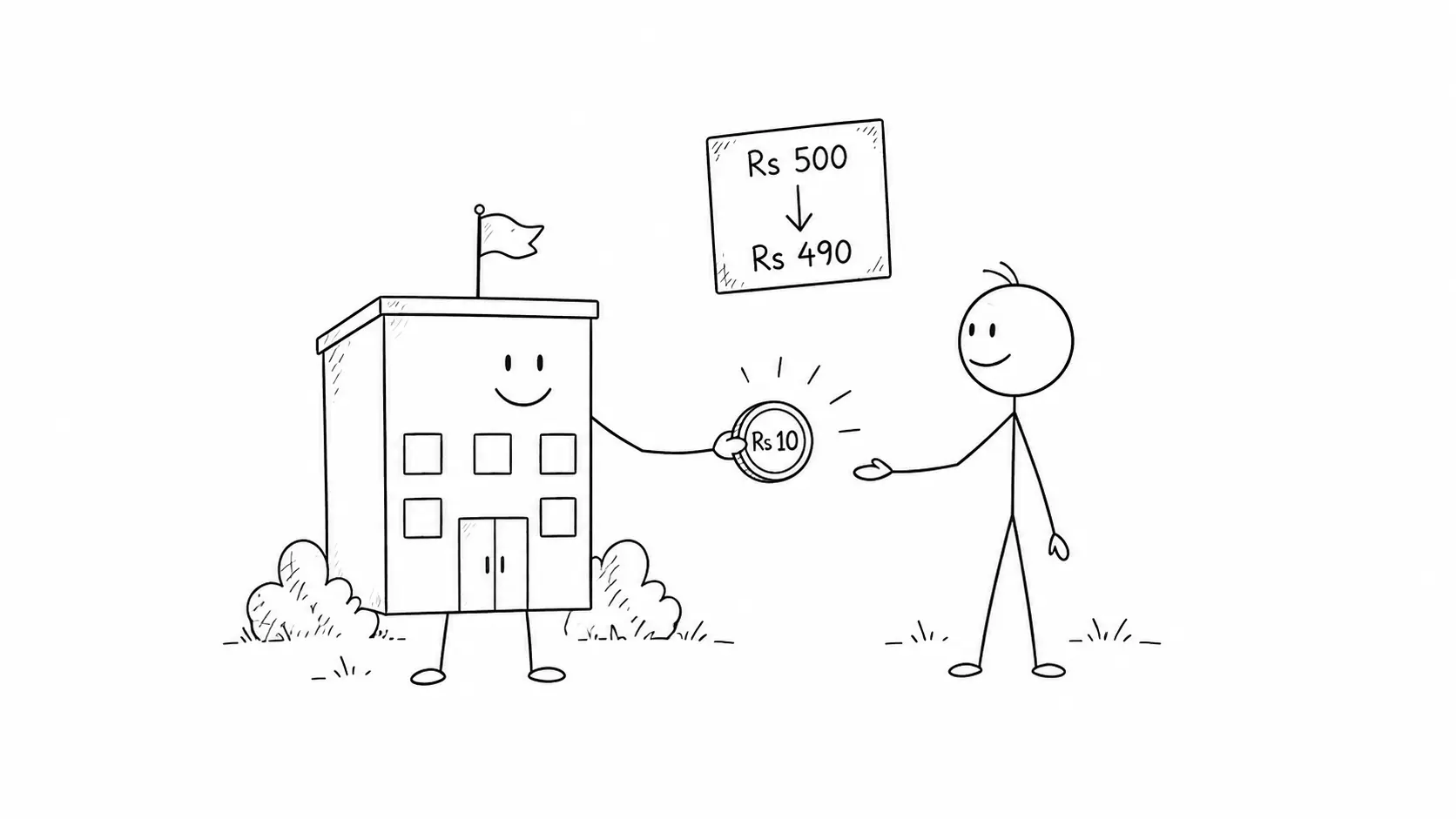
On the ex-date, the share’s price adjusts for the dividend. Say the share closed at Rs 500 with a Rs 10 dividend coming. The company now holds Rs 10 less cash per share, so a claim on the company is worth Rs 10 less. Ignoring other market moves, the economic value would be Rs 490. SEBI’s investor-education material describes the same adjustment: the ex-dividend price is the market price minus the dividend.
Absent every other market move, you are roughly where you started, Rs 490 of share plus Rs 10 of cash coming to you. The dividend did not create new money. It moved money from the company’s account to yours.
The tax on it
Since April 2020, dividends are taxed in a resident shareholder’s hands at their income tax slab rate. The company also deducts 10% TDS on dividends. For an individual shareholder, no TDS applies until the total dividend from one company in a tax year crosses Rs 10,000, provided it is paid by a mode other than cash. This is section 393 of the Income-tax Act 2025 (section 194 under the old Act); the current text is on the Income Tax Department’s site.
What a dividend does tell you
If a dividend mostly moves your own money back to you, why do I still like seeing one?
Because the cash is real. An earnings statement can be dressed up for a year or two. Wiring actual money to lakhs of shareholders, every year, is much harder to fake. A long dividend record is the company backing its reported profits with cash.
And for the promoter family itself, the dividend is often the cleanest income there is: they keep their full stake and still live off the business.
When to want it and when not to
A rupee paid out is a rupee the company cannot reinvest. A business with genuine room to grow often does more for its shareholders by keeping the money and compounding it inside the company. Many of the best-run companies in the country pay small dividends or none.
So there is no universally right payout. The question is always the same: is this rupee worth more inside this business or in my hand? The answer changes from company to company.
Author’s note: This article grew out of my 15 September 2026 tweet on dividends.